Does Your Zip Code Have You Boxed In? How Where You Live Shapes What You're Even Allowed to Want
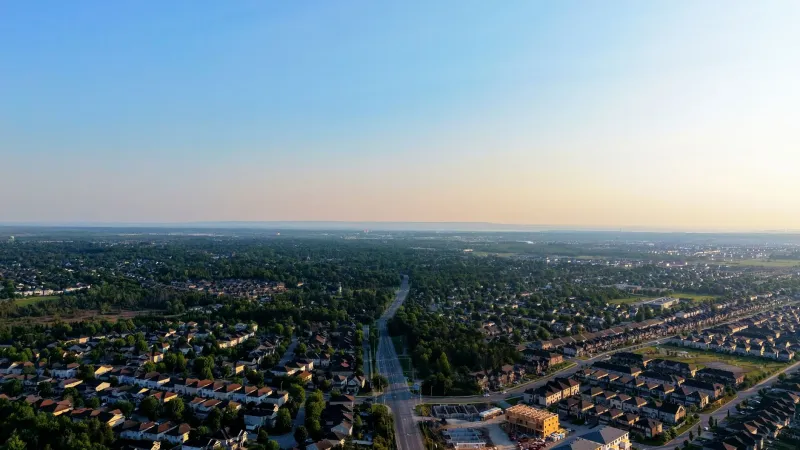
Most people think of their neighborhood as just... where they happen to live. A practical decision made at some point based on rent, commute, or proximity to a good school. But here's the thing: the place you call home isn't passive. It has an agenda. And if you've never stopped to interrogate it, there's a decent chance it's been making decisions for you that you thought you were making for yourself.
This isn't about conspiracy theories or urban planning paranoia. It's about something much more mundane and, honestly, more insidious — the way physical infrastructure, local policy, and business clustering quietly engineer the range of choices available to you every single day.
The Invisible Architecture of Everyday Life
Zoning laws are probably the least sexy topic you'll read about this month, but stick with us, because they matter more to your actual freedom than almost anything else at the local level.
Zoning determines what can exist where. In most American suburbs, single-use zoning means your residential street can only ever be residential. No corner bodega. No walkable coffee shop. No mixed-use building where a freelancer could rent a studio above a hardware store. Everything is separated — residential here, commercial there, industrial somewhere else entirely — and you need a car to connect any of it.
That design isn't neutral. It creates dependency. Dependency on vehicles, on big-box retailers clustered along arterial roads, on whatever businesses can afford the rent in the designated commercial zones. The mom-and-pop alternatives, the farmers markets, the repair shops — they often can't survive in that ecosystem. So your "choices" end up being whatever scaled-up chain operation found the location financially viable.
Compare that to a walkable neighborhood with mixed-use zoning, and the texture of daily life shifts dramatically. You have more vendors competing for your dollar. More informal networks. More ways to meet needs without getting in a car and surrendering an hour of your day.
Business Clustering: The Selection Effect Nobody Talks About
Have you ever noticed that certain cities seem to attract certain kinds of people, and then those people attract certain kinds of businesses, which attract more of those people? That's clustering, and it compounds fast.
If you live in a neighborhood where health-conscious food options are everywhere, you'll probably eat better — not because you're more disciplined than someone in a food desert, but because the friction of eating well is lower. If you live somewhere with a thriving independent business scene, you're more likely to support those businesses, develop those relationships, and build the kind of local economic resilience that doesn't evaporate the moment a national chain decides to close its location.
The flip side is just as real. Live somewhere dominated by fast food, payday lenders, and dollar stores, and those become your defaults — not because you chose them, but because they're what's there. Your zip code is literally curating your options, whether you consented to that curation or not.
Community Design and the Freedom Tax
There's a concept worth borrowing from urban planning called the "freedom tax" of car dependency. When your neighborhood requires a vehicle to accomplish basic tasks — groceries, work, medical appointments — you're paying a significant chunk of your income just to access your own life. AAA estimates the average American spends over $10,000 a year on vehicle ownership and operation. In a walkable city, that cost drops dramatically, and that money becomes yours again.
But it's not just financial. It's temporal. It's the hour-plus daily commute that eats into the time you could spend on a side project, a garden, or just being less exhausted. The physical design of where you live is either giving you back time and money or quietly extracting both.
Running a Neighborhood Audit
So how do you actually evaluate whether your current location is working for or against the life you want? Start with these questions:
What can you accomplish without a car in under 20 minutes? If the answer is "basically nothing," that's a data point worth sitting with. Walk Score (walkscore.com) gives you a quick read on this, but your own experience matters more.
What does the local business ecosystem look like? Count the independents versus the chains. Look at whether there are repair shops, specialty grocers, community spaces, or co-working options. A neighborhood full of nothing but national franchises is a neighborhood that's been optimized for consumption, not for living.
What are the zoning rules, and what do they prevent? Most municipalities post their zoning maps online. It's worth a look. If you've ever wanted to run a small business from home, host paying guests, or grow food commercially, your zoning code either makes that possible or illegal.
What's the local tax and regulatory environment? Property taxes, local income taxes, business licensing requirements — these vary wildly even within a single metro area. A town with punishing property taxes might look affordable on the purchase price and bleed you annually.
Who's in your immediate community? This one's harder to quantify, but it matters. A neighborhood full of people who share your values around independence, self-reliance, or entrepreneurship is a resource. The informal networks, the skill-sharing, the referrals — they compound over time.
What to Do With What You Find
If your audit surfaces some uncomfortable answers, you've got a few paths forward.
The first is optimization within your current location. Get involved in local zoning board meetings. Push for mixed-use development. Support the independent businesses that do exist so they can survive long enough to attract more. Local policy is genuinely changeable if enough people show up, and showing up is a lot more accessible than most people realize.
The second is intentional relocation. This isn't a decision to take lightly, but if your current zip code is fundamentally misaligned with the kind of life you're trying to build, that's worth acknowledging honestly. We've written before about how choosing the right state can have major financial implications — but the same logic applies at the neighborhood level. Where you plant yourself matters.
The third is building parallel infrastructure where the official kind falls short. Community gardens, tool libraries, local buy-nothing groups, skill swaps — these are ways of creating the resources your neighborhood might be lacking, and they tend to generate the kind of community density that makes a place genuinely worth living in.
Your Location Is a Choice (Even When It Doesn't Feel Like One)
Here's the honest truth: not everyone has the luxury of picking up and moving to a more walkable, more independent-friendly neighborhood tomorrow. Housing costs, family ties, job constraints — these are real. But awareness is still the first move.
Knowing that your zip code is actively shaping your options means you can start pushing back against the defaults it's handing you, making more deliberate choices within your constraints, and keeping relocation on the table as a genuine strategic option rather than a distant fantasy.
The goal isn't a perfect neighborhood. It's a clear-eyed understanding of the trade-offs you're living with — and a commitment to not letting geography make your choices for you by default.