Free Services Aren't Free: How Your Digital Life Is Quietly Collecting a Tab
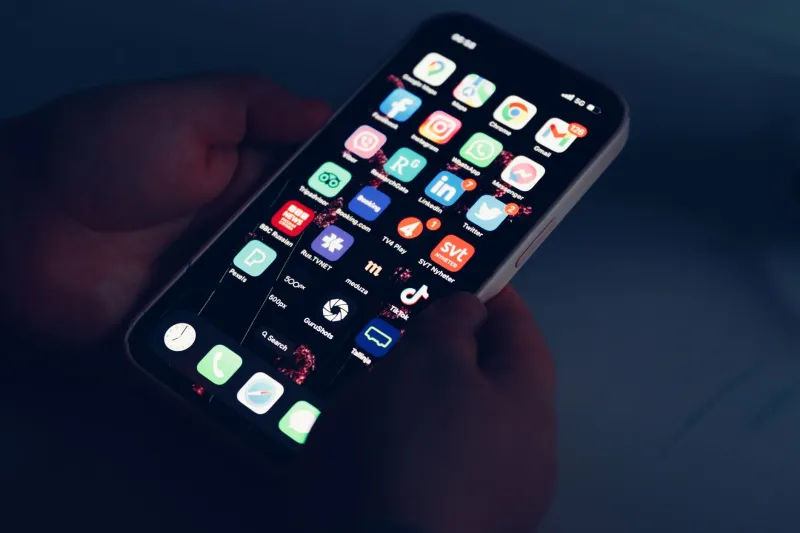
There's a line you've probably heard: if you're not paying for the product, you are the product. It's been repeated so many times it barely lands anymore. Which is exactly the problem.
Because the reality is sharper than that phrase makes it sound. It's not just that companies are monetizing your data in the abstract. It's that the design of these platforms — every notification, every infinite scroll, every algorithmic nudge — is specifically engineered to consume the one resource you can never get more of: your attention.
And attention, it turns out, is the real currency of independence.
The Invisible Ledger
Think about the free services woven into your average day. A social media platform or two (maybe three). A free email account. A search engine. A maps app. A news aggregator. Possibly a free tier of a productivity tool.
None of these charge you money. All of them charge you something.
Every time you open one of these apps, you're making a deposit into someone else's bank. You're generating behavioral data that gets packaged, sold, and used to influence your future decisions — what you buy, what you believe, where you direct your energy. The transaction is real. It's just denominated in something harder to see on a statement.
Beyond data, there's the raw time cost. The average American spends over seven hours a day consuming digital media. Some of that is intentional and valuable. A lot of it isn't. It's the three minutes you spent going down a comment thread you didn't plan to read. The fifteen minutes that evaporated because a notification pulled you out of something you were actually trying to do.
Multiply those micro-losses across a year and you're looking at weeks of your life — gone, and traded for nothing you consciously chose.
Psychological Overhead: The Cost You Can't Quantify
The financial independence community talks a lot about financial overhead — recurring costs that drain your net worth slowly and silently. Digital life creates an equivalent in mental overhead.
Each platform you're active on carries a background cognitive load. There's the ambient awareness that you should probably check it. The low-grade anxiety of unread notifications. The comparison reflex that kicks in when you see what someone else is doing, buying, or achieving. The subtle identity pressure of maintaining a curated presence.
None of this shows up in your budget. But it absolutely shows up in your decision-making, your energy levels, and your ability to think clearly about what you actually want versus what you've been nudged to want.
This is the part that makes digital attention debt so insidious: it doesn't feel like a constraint. It feels like connection. It feels like staying informed. It feels like being plugged in. And those things aren't nothing — but they come at a price that most people never stop to calculate.
The Subscription Layer Underneath
Then there are the digital subscriptions you are paying for — and probably more of them than you realize.
Streaming services, cloud storage, productivity suites, news subscriptions, premium app tiers, domain renewals, password managers, VPNs, podcast platforms, online courses you haven't opened in eight months. These add up fast. A lot of people are carrying $200–$400 a month in digital subscriptions without a clear sense of what's actually in the stack.
The sneaky part is that each individual charge feels negligible. Seven dollars a month for this. Twelve for that. But the aggregate is a significant line item, and more importantly, each subscription is a small tether — another thing you're obligated to, another account to manage, another company with access to your payment information and usage habits.
A Practical Audit for Your Digital Life
Regaining ownership of your attention starts with knowing what you've handed over. Here's a simple framework:
Step one: List every platform, app, and service you've used in the last 30 days. Free and paid. Don't filter — just list.
Step two: For each one, answer two questions. Does this serve a clear purpose in my life? And if I removed it, would I genuinely miss it, or would I just miss the habit of checking it?
Step three: Audit your paid subscriptions separately. Log in to your bank and credit card statements and pull every recurring digital charge. Some of these you'll have forgotten entirely.
Step four: Renegotiate your relationship with the ones you keep. Keeping Instagram doesn't mean keeping Instagram notifications on. Keeping a streaming service doesn't mean auto-playing the next episode. Every platform has settings that shift the power dynamic slightly back toward you — most people just never touch them.
Owning Your Digital Space
The alternative to renting your attention from algorithm-driven platforms is building a digital life you actually own. That looks different for everyone, but some principles hold up broadly.
Own your email list over your social following. A list of people who've opted in to hear from you is an asset. A follower count on a platform that can change its algorithm or ban your account tomorrow is not.
Pay for tools that respect your privacy and don't depend on harvesting your behavior to stay in business. The $5 a month for a good email client or a private search engine is often a better deal than the free version that charges you differently.
Be intentional about where you consume information. Curating your own reading list — even a simple one — puts you back in the editorial seat instead of handing that role to an algorithm whose incentives don't align with yours.
Attention Is the Asset
Financial independence is about having enough money that your time is yours. But if you've accumulated that freedom and then handed your time straight to a feed designed to keep you scrolling, you haven't actually gotten free.
Your attention is the raw material of everything you want to build. Guard it the same way you'd guard any other asset worth having. The platforms aren't going anywhere — but how much of yourself you give them is still your call.