From Side Hustle to Real Business: The Mindset Shift That Changes Everything
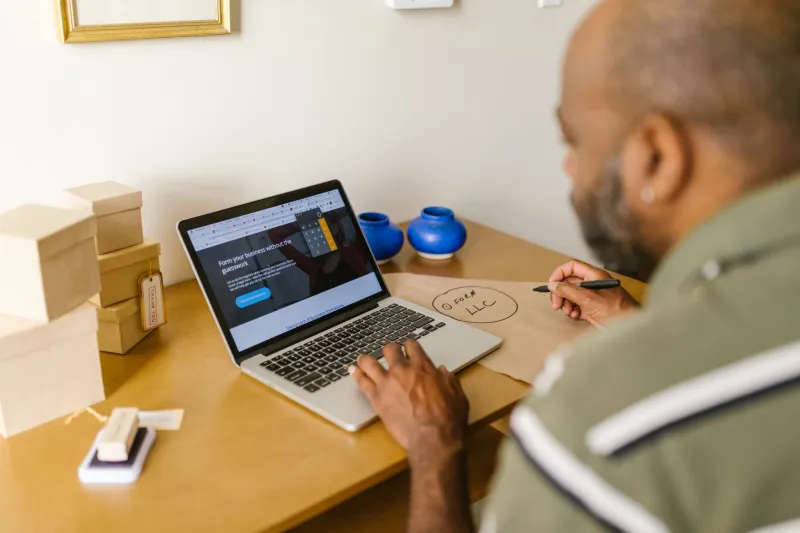
Somewhere between the third Uber ride of the night and the fourth freelance logo project that week, a lot of people hit the same wall. They're making extra money, sure. But they're also exhausted, trading hours for dollars with no real end in sight. That's the hustle trap — and it's sneakier than it sounds.
The good news? A quiet but real shift is happening across the country. More Americans are stepping back from the grind mentality and asking a harder question: What if I built something instead?
Hustle vs. Business: They're Not the Same Thing
The word "hustle" has been sold to us as a virtue. And look, there's nothing wrong with working hard. But hustle, by its very nature, stops the moment you do. You drive, you get paid. You write the article, you get paid. You stop? The money stops too.
A business — even a small one — is built on a different logic. It's designed to generate value that doesn't require you to be personally present every single time. That might mean a product someone can buy at 2 a.m. while you're asleep. It might mean a service that's structured enough to delegate. It might mean recurring revenue that shows up without a new sales pitch every week.
The difference isn't just financial. It's psychological. Hustle culture keeps you reactive. Building a business forces you to think like an owner.
Real People Making the Real Shift
Take someone like Marcus, a high school history teacher in Ohio who started selling hand-painted wooden signs on Etsy in 2019. For the first year, he treated it exactly like a hustle — take an order, make a sign, ship it, repeat. He was clearing maybe $400 a month and burning out fast.
The pivot came when he stopped making every sign himself and started creating design templates he could sell as digital downloads. Same creative output, but now it scaled. By 2022, his Etsy shop was bringing in more per month than his teaching salary. He still teaches — because he wants to, not because he has to.
Or consider Priya, a registered nurse in Austin who started a health coaching practice on the side. At first, she took every one-on-one client she could get, running herself ragged between 12-hour hospital shifts and evening Zoom calls. The shift happened when she packaged her coaching into a six-week online course. Suddenly, one unit of effort reached dozens of clients instead of one. She's not fully out of nursing yet, but her coaching income now covers her mortgage.
These aren't overnight success stories. They're slow, deliberate pivots — and that's exactly the point.
The Milestones That Tell You It's Time to Think Bigger
So how do you know when you've crossed from hustle territory into something worth calling a business? A few signals worth watching for:
You've got repeat customers. If people are coming back without you chasing them, that's proof of concept. You've built something people actually want.
You've hit a ceiling on your own time. If you're maxed out and still can't take on more, that's not a growth problem — it's a systems problem. Time to think about automation, delegation, or productizing what you do.
Your income is starting to look consistent. One good month is luck. Three or four in a row is a pattern. Patterns are what businesses are built on.
You've started thinking about processes, not just tasks. The moment you find yourself writing down how you do something so someone else could theoretically do it too, you've already started thinking like a business owner.
The Scalability Question Nobody Asks Early Enough
Here's the question that separates hustlers from builders: Can this work without me doing every single piece of it?
It doesn't have to be fully automated or hands-off overnight. But if the honest answer is "absolutely not, ever," then what you have is a job — just one where you're also the boss, the HR department, and the janitor.
Scalability doesn't have to mean going corporate or hiring a team of twenty. It can mean:
- Selling a digital product alongside a service
- Creating a subscription model with predictable monthly revenue
- Building a referral system so you're not always hunting for new clients
- Licensing your method or content to others
The goal is to build leverage. Your time stays fixed at 24 hours a day. A business, at its best, is how you get more output from the same input.
Why the Independent Mindset Is the Real Advantage
Here's something the hustle crowd doesn't talk about enough: the mental shift is harder than the tactical one. Learning to use Shopify or set up an LLC — that stuff is learnable in an afternoon. Deciding to stop thinking of yourself as someone who does work and start thinking of yourself as someone who builds systems? That takes longer.
But people who are already wired for independence — who already push back on the idea that a single employer should control their financial life — tend to make that mental leap faster. They're not waiting for permission. They're not looking for a corporate ladder to climb. They're already asking, "How do I make this work on my own terms?"
That's the freedom mindset in action. And it's exactly why building a real business, not just a hustle, fits so naturally into the independent life.
Starting the Shift Without Torching What You Have
Nobody's saying quit your job tomorrow. In fact, the smartest builders tend to make the leap only after they've got real evidence — consistent revenue, a clear path to more, and ideally some runway saved up.
But you can start shifting the way you think about your side income right now. Ask yourself: Is what I'm doing today something I could eventually hand off, automate, or scale? If not, what would have to change for that to be true?
The hustle might pay the bills this month. The business is what buys back your time — permanently.
And that, ultimately, is what freedom actually looks like.