Who's Bidding on Your Brain? The Attention Economy and How to Buy Yourself Back
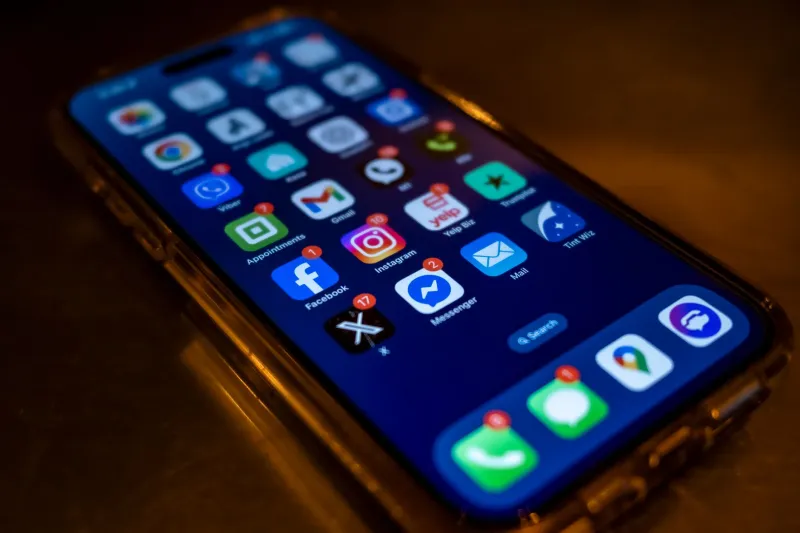
At some point in the last decade, a transaction happened that you never consciously agreed to. You signed up for a free app, or a social platform, or a news feed — and in exchange, you handed over something far more valuable than money. You handed over your attention. Indefinitely. At scale. To people whose entire business model depends on keeping you hooked.
Welcome to the attention economy, where your mental real estate is the product, your focus is the inventory, and you are both the customer and the commodity.
The Auction You're Already In
Here's how the machine works, simplified: platforms like Instagram, TikTok, YouTube, and even your email client generate revenue primarily through advertising. Advertisers pay for eyeballs — specifically, for the attention of users who fit certain demographic and behavioral profiles. The more time you spend on a platform, the more ads you see, the more data you generate, and the more valuable you become to that platform's revenue model.
This means every design decision these companies make is optimized for one thing: keeping you there longer. The infinite scroll that never gives you a natural stopping point. The autoplay video that starts before you've decided you want to watch. The notification that fires right when you were about to put your phone down. None of that is accidental. It's engineering. Specifically, it's behavioral engineering — built on decades of psychological research into habit formation, variable reward schedules, and the specific vulnerabilities of the human attention system.
B.J. Fogg at Stanford built a whole lab around this. Nir Eyal wrote a book called Hooked that became a bible for product designers. The techniques are documented, discussed openly in tech circles, and deployed against you every time you open an app. The asymmetry here is significant: you are one person with a brain that evolved for a completely different environment. They are teams of engineers with billions of dollars and access to your behavioral data in real time.
What This Actually Costs You
The obvious cost is time. The average American spends somewhere north of four hours a day on their phone. Over a year, that's roughly 60 full days. Over a decade, it's nearly two years of your life spent looking at a screen, much of it driven not by genuine choice but by algorithmic nudging.
But the subtler cost is harder to quantify. Constant context-switching — the mental whiplash of jumping between notifications, feeds, and tasks — erodes your capacity for deep focus. Cal Newport has written extensively about this, and the research backs him up: even the presence of your phone on your desk, face down and silent, measurably reduces your cognitive performance on tasks that require concentration.
Then there's the identity dimension. Algorithms don't just steal your time — they shape what you think about, what you want, and how you see yourself. When the content you consume is curated by systems designed to maximize engagement, you end up in a feedback loop where your worldview is continuously being nudged toward whatever keeps you scrolling. That's not a neutral process. It's one that gradually outsources your perspective to whoever is paying for your attention that day.
The Psychological Hooks (And How to Spot Them)
Knowing what you're up against is more useful than any app timer. A few of the most common mechanisms:
Variable reward. This is the slot machine principle. Checking your phone produces unpredictable results — sometimes something interesting, usually nothing. That unpredictability is what makes it compulsive. Your brain releases dopamine in anticipation of the reward, not just when it arrives. The scroll is the pull of the lever.
Social validation loops. Likes, comments, follower counts — these tap into deeply wired social instincts around belonging and status. Platforms make these metrics visible and real-time because doing so keeps you checking back. Your brain treats a like the same way it treats a nod of approval from someone in your tribe. It's not trivial; it's neurologically significant.
Artificial urgency. Stories that disappear. Limited-time offers. "X people are looking at this right now." Scarcity and time pressure are classic persuasion tools, and digital platforms deploy them constantly to short-circuit deliberate decision-making.
Personalization as a trap. The more a feed knows about you, the better it gets at showing you things you'll respond to. This feels like a service — and sometimes it is. But it also means the algorithm is continuously optimizing for your engagement, not your well-being. Those are not the same thing.
Reclaiming Your Focus Without Going Off the Grid
You don't have to delete everything and move to a cabin. That's not a realistic or necessary response. What you do need is a deliberate architecture for your attention — one that you design, not one that's designed for you.
Start with your defaults. The most powerful interventions are structural, not motivational. Turn off all non-essential notifications. Move social apps off your home screen. Use a grayscale display setting — color is part of what makes phones visually compelling. These aren't dramatic changes, but they remove a lot of the friction-free pathways that pull you in without a conscious decision.
Time-box your consumption. Instead of checking your phone reactively throughout the day, designate specific windows for email, social, and news. Twenty minutes in the morning, twenty at lunch, twenty in the evening. Outside those windows, the feeds don't exist. This sounds rigid, but it actually creates more freedom — you stop being on call for the algorithm.
Replace before you remove. Willpower is a limited resource. If you try to simply stop scrolling without giving your brain something else to do in those moments, you'll fail. Replace the habit with something that serves you — a book, a walk, a creative project, even a conversation. The goal is to build competing pathways, not just block the existing ones.
Audit your tools like you'd audit your subscriptions. Every platform you're on is a relationship, and relationships should be evaluated. What are you actually getting from this one? Is it worth the time and data you're giving in exchange? Some will pass the test. Others won't. Cut the ones that don't.
Create friction intentionally. Log out of apps after each use. Delete them from your phone and only access them via browser. Put your phone in another room when you're working. Make the path to mindless consumption slightly harder, and you'll take it far less often.
Your Attention Is the Point
The companies profiting from your distraction are not going to fix this for you. Occasional digital wellness features are PR, not structural change. The system is built to capture your attention, and it's very good at its job.
But here's what they can't take from you: the decision to be deliberate. Your attention is finite, irreplaceable, and entirely yours to allocate. Every hour you spend on autopilot inside someone else's platform is an hour not spent building something, learning something, or simply being present in your own life.
The auction is always running. The question is whether you're going to keep showing up as inventory — or whether you're going to walk out of the room.